The Best Chain Styles for Men: A Style-by-Style Breakdown
Picking a chain feels like it should be simple. You want a chain. There are a hundred different chain styles. They all look kind of similar in product photos. How do you know which one is actually right for you?
This guide breaks down the most common men's chain styles — what each one looks like, who it tends to suit, and what kind of outfit it works best with. Whether you're buying your first chain or expanding a collection, you'll leave with a clear sense of which styles fit your wardrobe and your aesthetic.
Cuban Link
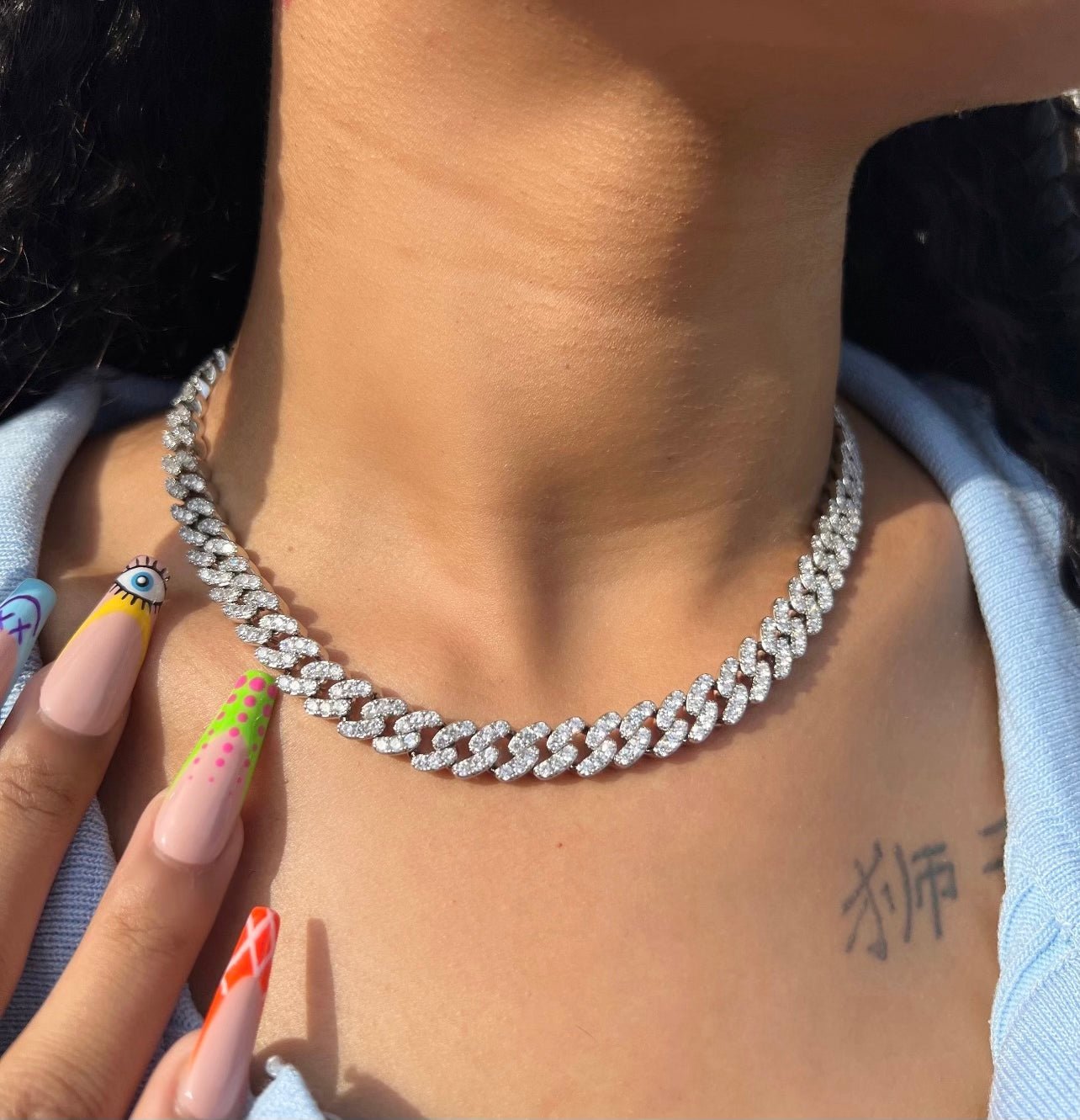
The most popular men's chain style by a wide margin. Cuban link chains have flat, interlocking oval links that lay smooth against the chest. They come in widths from delicate (3mm) up to statement (15mm+), which makes them flexible across daily wear and bolder looks.
Cuban chains read as confident and structural. The flat link shape is masculine without being aggressive, and the chain works equally well under a t-shirt or fully visible with an open collar. If you're buying one chain that needs to do everything, this is usually the right answer.
Best for: Daily wear, layering, anyone who wants one chain that goes with everything. The 6mm width at 22 inches is the most flexible single piece.
Figaro
The Figaro chain has a distinctive pattern — alternating short and long links, usually two or three short circular links followed by one elongated link. The pattern repeats throughout the chain, giving it a more textured visual rhythm than the smooth uniformity of a Cuban link.
Figaro chains have a classic, slightly retro feel — they were the standard men's chain style in the 70s, 80s, and 90s, which gives them a vintage element when worn today. They suit slightly more formal looks and tend to read as more traditional than Cuban or rope styles.
Best for: A more classic or refined look, men who want something with character beyond a uniform link, lighter daily wear at smaller widths.
Rope
Rope chains are made of multiple small links twisted together to create a textured, spiral pattern that resembles a rope. The result is a chain that catches light from many angles, giving it more sparkle and movement than flat-link styles.
Rope chains read as classic and dressy — they tend to suit slightly older aesthetics, formal occasions, and outfits where you want some shine without an iced-out chain. They also work especially well with pendants, since the textured chain frames the pendant nicely.
The trade-off is durability. Rope chains have more individual links and connection points than Cuban or Figaro, which means more places where a chain can kink or break with rough handling. They're not fragile, but they're worth being careful with.
Best for: Pendant chains, more formal looks, anyone who wants a chain with visual texture and shine.
Box
Box chains have square links connected end-to-end, creating a chain that looks like a series of small cubes from up close. From a distance, they read as a clean, uniform line — one of the most minimal-looking chain styles available.
Box chains are understated and modern. They work especially well as pendant chains because they don't compete visually with the pendant itself — the chain becomes nearly invisible against the skin, letting the pendant be the focal point. Box chains also tend to lay flat and resist twisting, which keeps a pendant facing the right direction throughout the day.
Best for: Pendant chains, minimalist looks, anyone who wants a chain that's barely there.
Curb
Curb chains are the closest cousin to Cuban link — oval interlocking links that lay flat — but with a slightly different proportion. Curb links are typically a bit thicker and shorter than Cuban links, giving the chain a denser, more substantial feel at the same width.
The visual difference between Cuban and curb is subtle. In product photos, they often look identical. In person, curb chains feel slightly heavier and more compressed; Cuban chains feel slightly more elongated and refined. Both work for similar use cases.
Best for: Same use cases as Cuban link — a slightly heavier, denser alternative for anyone who wants more weight per inch.
Franco
The Franco chain is a four-sided box-like chain with a flat, snake-like profile. It's tighter and more uniform than Cuban or curb, with very small interlocking links that create a chain that feels almost like a solid metal cord.
Franco chains have a sleek, polished look — less aggressive than Cuban, more substantial than box. They lay completely flat against the body and resist tangling well. They tend to read as modern and clean, suiting contemporary outfits more than traditional ones.
Best for: Daily wear, modern aesthetic, layering with similar-style chains, anyone who finds Cuban link too bulky and box chain too thin.
Snake
Snake chains are smooth, rounded chains that look like a single tube of metal with no visible link pattern from a distance. Up close, you can see they're made of small overlapping rings, but the overall effect is a fluid, continuous curve.
Snake chains are extremely flexible and lay beautifully against the skin, but they have one significant drawback: they kink easily and are nearly impossible to repair if they do. A kinked snake chain is usually permanent damage.
Best for: Pendant chains in lower-impact wear, dressier occasions, anyone who likes the smooth visual of an unbroken metal line. Less ideal for active or rough daily use.
Wheat (Spiga)
Wheat chains, sometimes called Spiga chains, are made of four strands of twisted oval links that interlock in a pattern resembling stalks of wheat. They're textured and dense, with a distinctive look that doesn't read as any other style.
Wheat chains are durable and have a unique visual character. They work well as pendant chains because the texture supports a pendant without competing with it, and they suit men who want a chain that's recognizably different from the more common styles.
Best for: Pendant chains, anyone who wants a less common chain style with visual texture, durable daily wear.
Mariner (Anchor)
Mariner chains have an oval link with a small bar across the middle of each link, designed to evoke the look of an anchor chain on a ship. The bar in the middle gives the chain a distinctive nautical character that no other style has.
Mariner chains are classic but with personality. They suit men who want something with visual character beyond a plain link, and they pair especially well with maritime or vintage-inspired aesthetics. They also layer well with other chain styles because the unique link pattern doesn't compete visually with smoother chains.
Best for: Anyone who wants a chain with character and history, layering with simpler styles, vintage or maritime-inspired looks.
Tennis
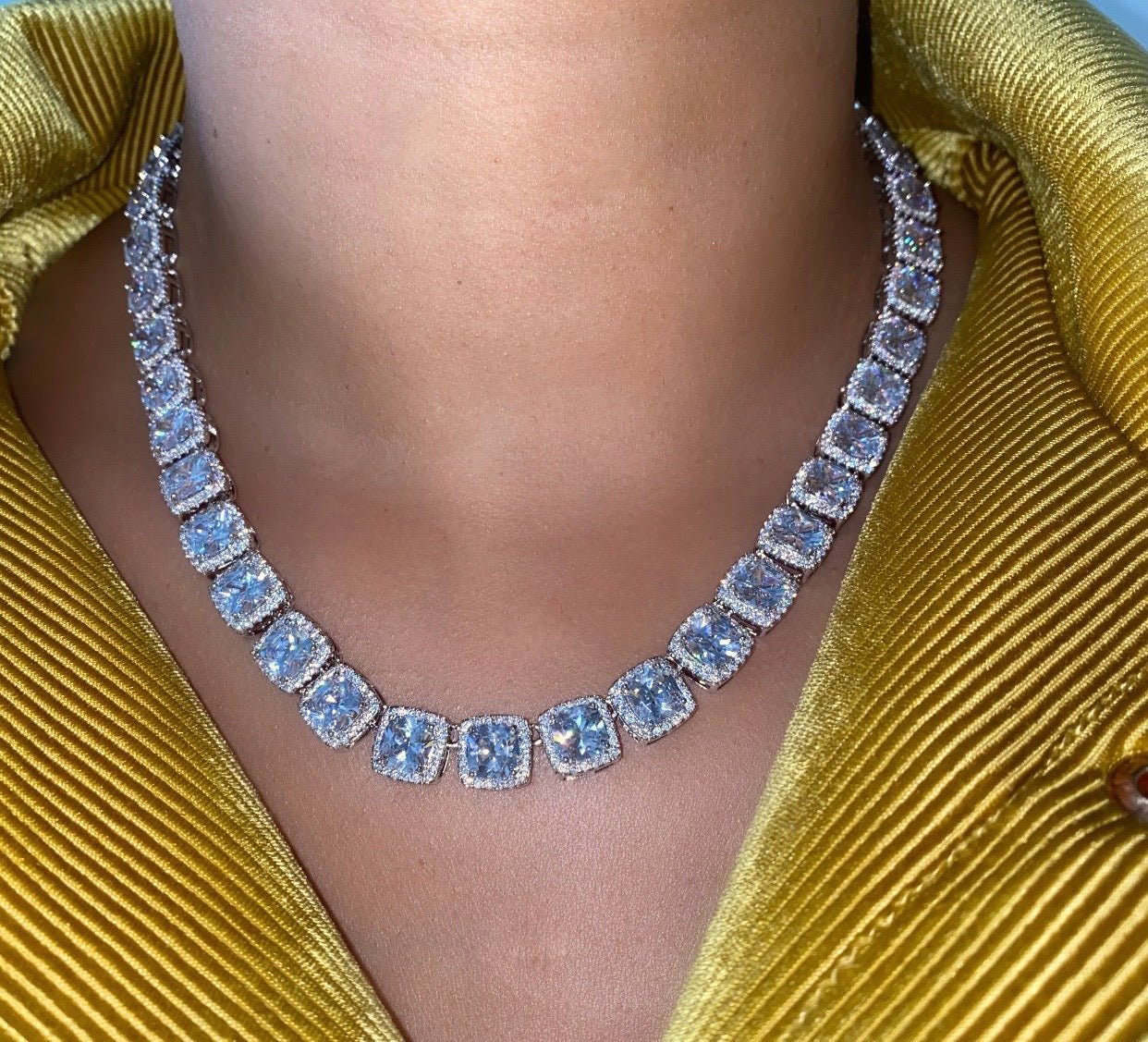
The tennis chain is the outlier on this list — it's not a link chain at all, but a continuous strand of small stones (CZ or diamonds) set in metal prongs. The result is a chain that's all sparkle, with no visible link pattern from the front.
Tennis chains for men have grown significantly in popularity over the last decade. They suit dressier looks, statement pieces, and any time you want shine without bulk. Larger stone sizes (5mm+) carry better on a male frame than the dainty 2–3mm versions more common in women's pieces.
For a deeper comparison between tennis and Cuban, see our guide on Tennis Chain vs. Cuban Chain.
Best for: Statement looks, layering with a Cuban anchor chain, dressier occasions, anyone who wants sparkle without the weight of a chunky link chain.
Iced-Out Cuban
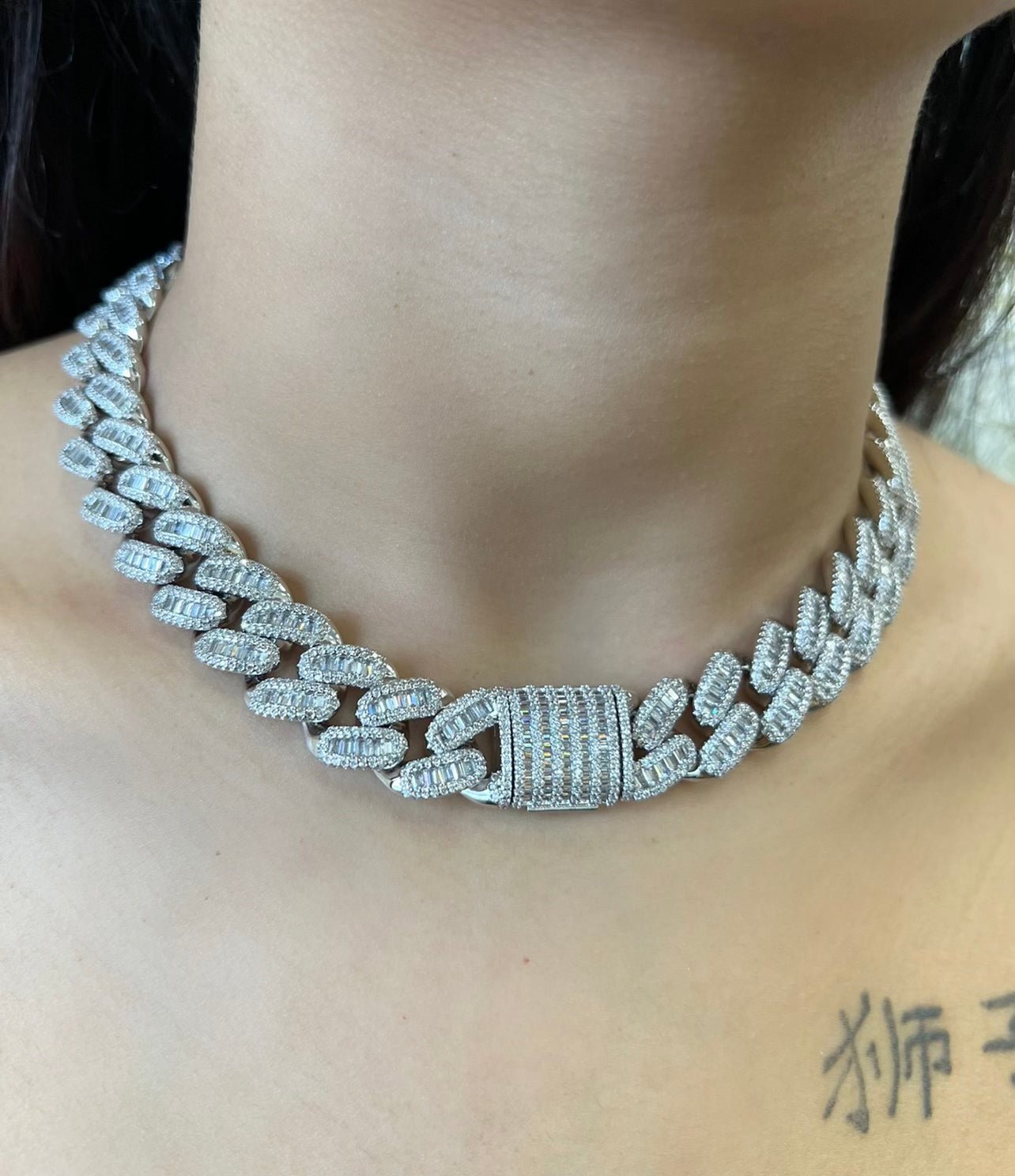
An iced-out Cuban combines the structure of a Cuban link with the sparkle of stones (CZ or diamonds) set into each link. The result is a chain that has both presence and brilliance — the link shape is still visible underneath, but the surface catches light from every angle.
Iced-out Cubans are the modern statement chain of choice. They suit confident styling, work especially well in music and fashion contexts, and pair beautifully with similar-tone plain Cuban chains for layered looks.
For a breakdown of what's actually in iced-out chains (real diamonds vs. CZ vs. moissanite), see our guide on whether iced-out chains are real diamonds.
Best for: Statement pieces, layering on top of plain Cuban chains, anyone who wants their chain to be the focal point of an outfit.
How to Pick Your First Chain
If you've never owned a chain and you're trying to pick one to start with, here's a reliable framework:
- Want one chain that does everything? 6mm Cuban link at 22 inches in solid sterling silver or solid stainless steel.
- Want a pendant chain that disappears behind the pendant? 2–3mm box or snake chain at 22 inches.
- Want something classic with more personality? 5mm Figaro or rope chain at 22 inches.
- Want a statement piece for special occasions? 8–10mm iced-out Cuban at 22–24 inches.
The 22-inch length is the most flexible default for men — it lands at the upper chest, works with most necklines, and is the standard reference point in the industry.
Building a Chain Collection Over Time
Most men with a strong chain collection didn't buy everything at once. The natural progression looks something like:
- Start with a flexible daily-wear chain (Cuban or Figaro, mid-width)
- Add a pendant chain when you find a pendant you love (box or snake)
- Add a statement piece for special occasions (iced-out Cuban or tennis)
- Add a contrasting style to layer with the daily wear (rope, mariner, or wheat)
Each piece serves a different purpose. Buying multiple chains in the same style at the same width is the most common collection-building mistake — you end up with three chains that all do the same job.
Width Considerations by Build
Wider chains carry better on broader frames; thinner chains tend to suit smaller frames. As a rough guide:
- Smaller or slimmer build: 3–6mm chains
- Average build: 5–8mm chains
- Larger or broader build: 7–12mm chains
This isn't a rule, just a starting point. Plenty of slim guys wear 10mm Cuban chains beautifully because the chain is part of their style. Try chains on — product photos can be misleading, and width that looks balanced on a model may land differently on you.
Bottom Line
The best chain for you depends on what you want it to do. Cuban link is the most flexible choice for daily wear. Figaro and rope read as more classic. Box and snake disappear behind pendants. Tennis and iced-out Cuban are statement pieces. Mariner and wheat give you something with character beyond the standard styles.
If you're starting out, go with a 6mm Cuban link in solid sterling silver or stainless steel — it's the most flexible single chain you can own and it'll teach you what you actually like before you commit to anything more specialized.
Browse our Necklaces collection to see all the styles in person, or check the Best Sellers for what most customers come back for. For more on layering chains together, our guide on how to layer Cuban chains covers width, length, and metal pairing in detail.