Tennis Chain vs. Cuban Chain: What's the Difference?
Tennis chain or Cuban chain. Both are go-to choices when you want a chain that pulls attention, but they couldn't look more different on. One is all sparkle and elegance. The other is all weight and structure. Picking the right one comes down to what you actually want it to do for your outfit — and most people don't get a clear breakdown before they buy.
This guide explains exactly what makes each style different: how they're built, how they wear, what they cost, and which one fits the look you're going for. By the end, you'll know whether you should be shopping the tennis aisle or the Cuban aisle — or whether the answer is both.
Quick Answer
A Cuban chain is a metal link chain with thick, flat, interlocking links — think bold, masculine, structural. A tennis chain is a continuous row of small stones (usually diamonds or CZ) set in metal prongs — think delicate, sparkly, elegant.
Cuban chains are about presence. Tennis chains are about light. Both can be incredible. They're answering different questions.
What a Cuban Chain Actually Is
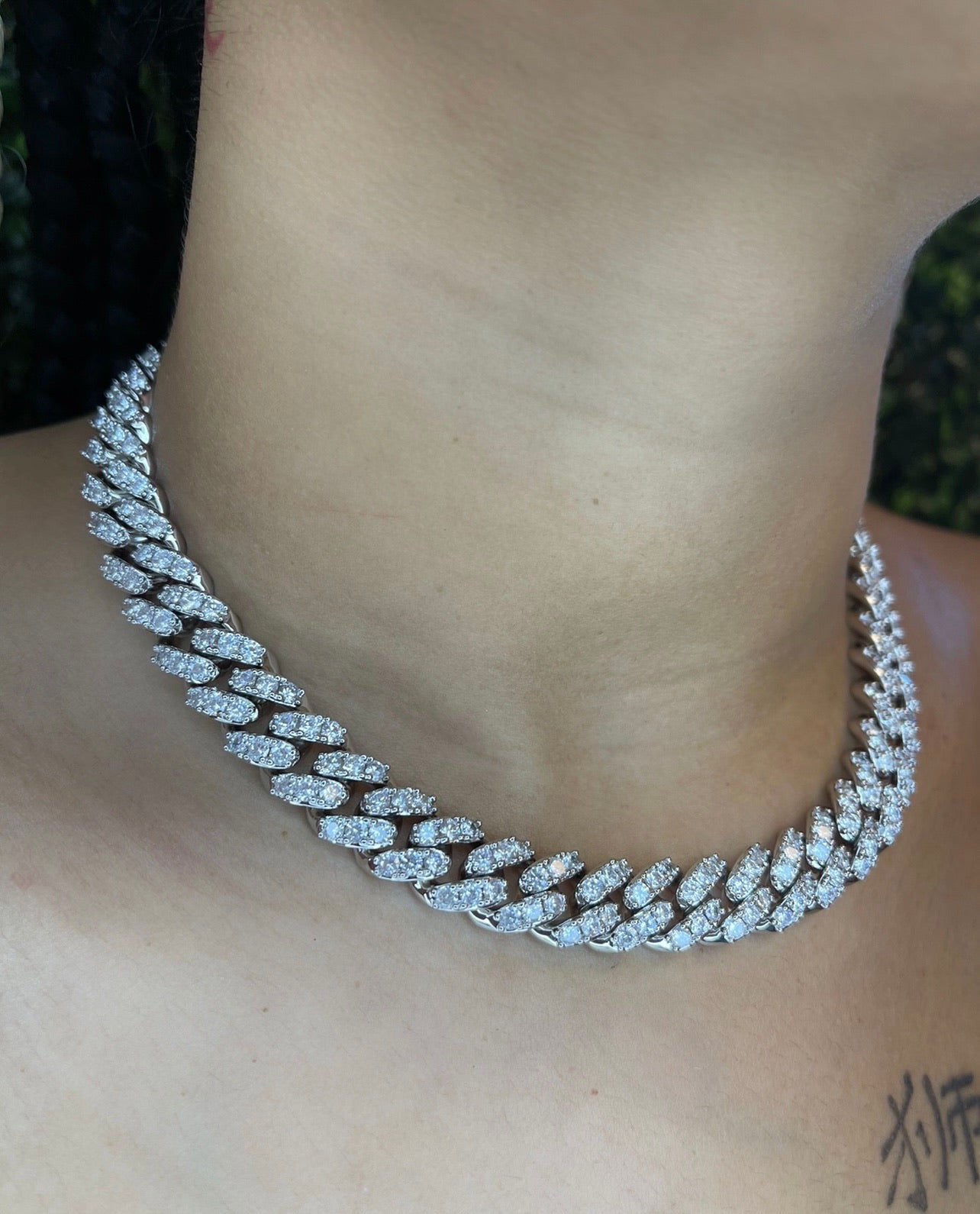
The Cuban link — sometimes called Miami Cuban — is named after the style that took off in Miami's Cuban-American community in the 1970s and 80s. The defining feature is the link shape: each link is a flattened oval, and the links interlock so the chain lays flat against the skin instead of bunching or twisting.
Cuban chains are measured by width in millimeters. The most common range is 4mm to 12mm, but you can find them as thin as 2mm and as wide as 20mm+ for statement pieces. Width drives almost everything about how the chain reads:
- 2-4mm: Subtle, layers easily, reads as restrained
- 5-7mm: The sweet spot for daily wear — visible but not loud
- 8-10mm: Statement territory, draws the eye on its own
- 12mm+: Heavy, intentional, worn alone
The other variable is whether the chain is plain or iced — "iced" meaning the links have stones (CZ or diamonds) set into them. An iced Cuban combines the structure of the link with the sparkle of pavé stones, but the underlying silhouette is still the Cuban shape.
What a Tennis Chain Actually Is
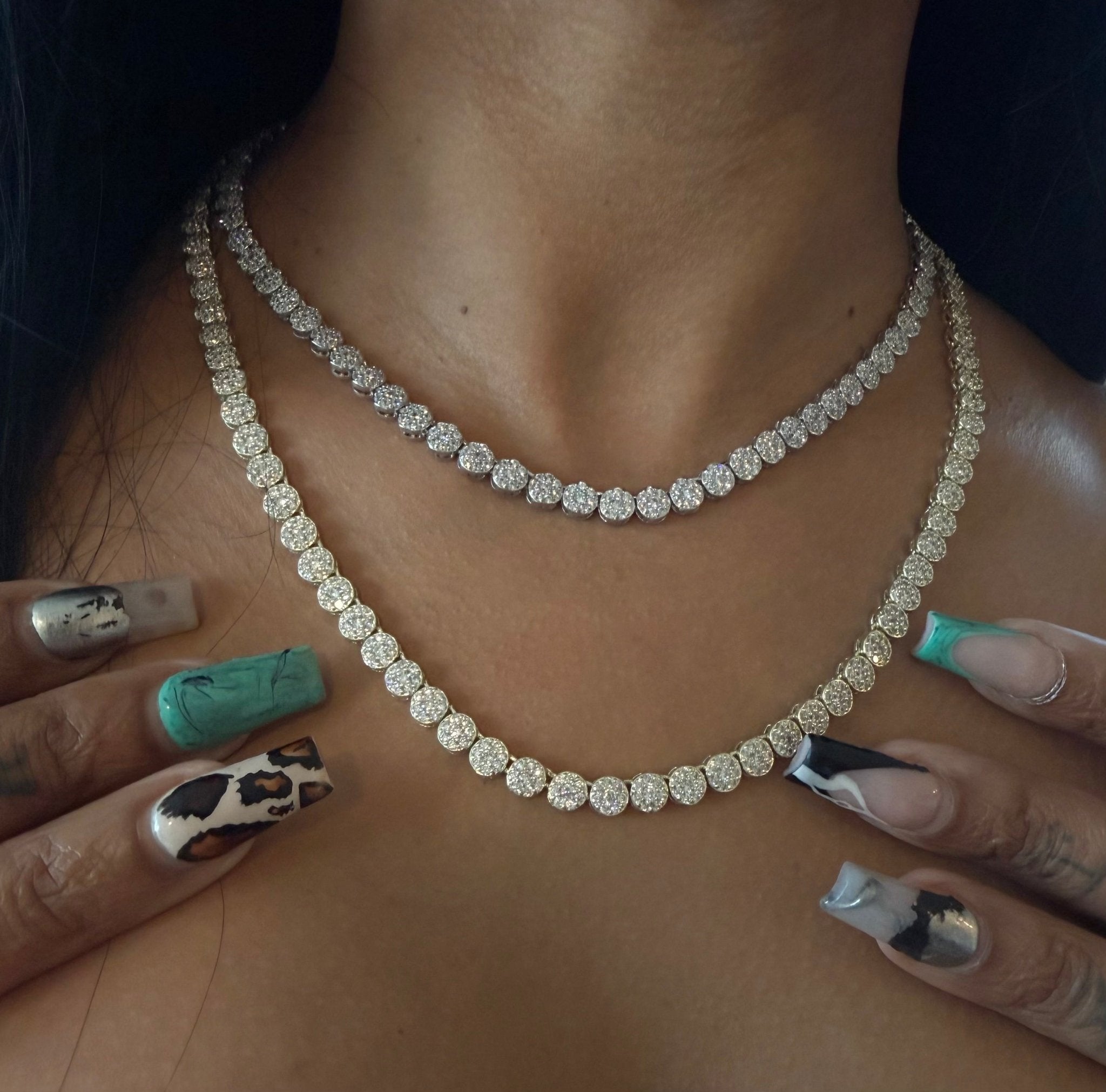
A tennis chain is a continuous strand of small stones — each stone individually set in a four-prong metal mount, with the mounts linked together so the stones sit shoulder-to-shoulder around the chain. The result is a continuous line of light. There's no link pattern visible from the front; just stones.
The name comes from a 1987 US Open match where tennis player Chris Evert lost her diamond bracelet on the court and asked officials to pause the match while she found it. Reporters called it her "tennis bracelet," the name stuck, and now any continuous line of prong-set stones in a chain or bracelet carries the name.
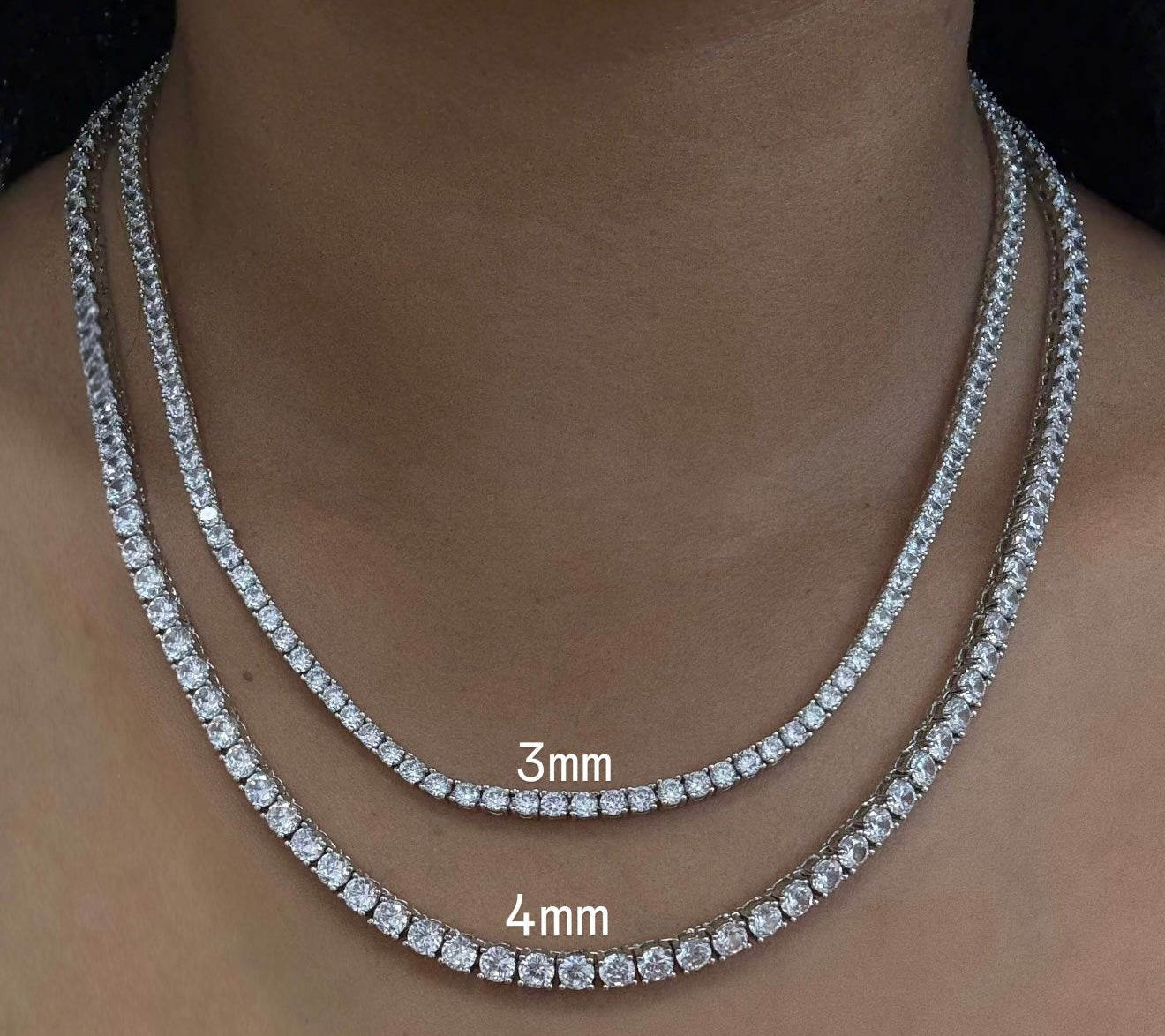
Tennis chains are measured by stone size, usually in millimeters of stone diameter. Common sizes:
- 3mm stones: Delicate, almost dainty, layers well under shirts
- 4-5mm stones: The most popular range — noticeable, balanced
- 6mm+ stones: Big, bold, hard to miss
Tennis chains are almost always set with either real diamonds or cubic zirconia (CZ). The setting style matters: better tennis chains have stones set close enough together that no metal shows between them from the front, which is what creates the continuous-light effect.
How They Look On
This is where the difference becomes obvious.
A Cuban chain reads as solid and structural. It draws attention to the chain itself — the weight, the links, the metal. It's masculine in the traditional sense, though plenty of women wear them well. It complements broader necklines, hoodies, and looks where you want a confident statement.
A tennis chain reads as light and elegant. It draws attention away from the chain and toward the sparkle. It's traditionally feminine but increasingly worn across the board, especially in smaller stone sizes. It complements dressier outfits, finer fabrics, and any look where you want shine without bulk.
Worn together, they're complementary — the structure of the Cuban anchors the brightness of the tennis. That's why iced-out Cubans (which combine both elements in one chain) have become so popular: they give you both at once.
Comfort and Daily Wear
Cuban chains are heavier. A 6mm Cuban at 22 inches in solid sterling silver is a noticeable weight on your neck — not uncomfortable, but you feel it. In gold or solid stainless, it's even more substantial. If you're not used to wearing a chain, this can take a few days to adjust to.
Tennis chains are lighter for the same visual presence. A 4mm tennis chain weighs much less than a 6mm Cuban because the structure is mostly small prongs holding stones, not solid metal. Many people who find Cuban chains too heavy for all-day wear settle on tennis chains as their daily option.
Tennis chains do require slightly more care — the prongs that hold the stones can catch on fabric, hair, or skin if you're rough with them. A Cuban chain is essentially indestructible in normal wear; a tennis chain isn't fragile, but it's worth being mindful of.
Price Differences
At the same metal and quality level, tennis chains cost more than plain Cuban chains. The reason is straightforward: a tennis chain has 100+ individually set stones, each with its own prong setting, which is much more labor-intensive than casting and assembling Cuban links.
Iced-out Cuban chains close the gap — they have stones too, just set into the links rather than on top of them. An iced Cuban and a tennis chain at similar widths and stone qualities tend to land in the same price range.
If you're buying CZ rather than diamonds, the price difference between styles narrows further. CZ tennis chains are accessible and offer most of the visual impact of diamond tennis chains at a fraction of the cost.
Which One Should You Buy?
Pick a Cuban chain if:
- You want a chain that's visible on its own from across the room
- You wear casual outfits more than dressy ones
- You want one chain that goes with everything in your wardrobe
- You like the feel of weight on your neck
- You're building a layered stack and need an anchor
Pick a tennis chain if:
- You want sparkle without bulk
- You wear it under shirts often and want subtle visibility
- You're going for an elegant or polished look more than a streetwear look
- You prefer lighter jewelry
- You already have a Cuban chain and want something different
Pick an iced-out Cuban if you can't decide — it's the closest thing to having both styles in one chain.
Common Misconceptions
"Tennis chains are only for women." Not true anymore, and arguably never was. Plenty of artists, athletes, and style icons wear tennis chains — often in larger stone sizes for more presence. The styling has shifted in the last decade, and a tennis chain on a man reads as confident and polished, not feminine.
"Cuban chains are flashy." They can be, at large widths. But a 4mm Cuban is one of the most understated chains you can wear. Width is the variable; the link shape itself is just a clean structure.
"Iced chains aren't real diamonds." Sometimes true, sometimes not. Iced chains can be set with real diamonds, lab-grown diamonds, or CZ. The pricing is the giveaway — a $200 iced chain isn't real diamonds, but a $20,000 iced chain probably is. We cover this in more detail in our guide on iced chains.
"You can only wear one or the other." The opposite is true. A Cuban chain and a tennis chain together is one of the cleanest stacked looks possible — the contrast between structure and sparkle does the work for you.
How They Layer Together
If you want both, here's a stack that always works: a 6mm plain Cuban at 22 inches as your anchor, plus a 3-4mm tennis chain at 18 or 20 inches sitting above it. The tennis chain catches light at the collarbone, the Cuban gives weight below it, and the contrast makes both pieces look better than they would alone.
Keep the metals consistent — both gold or both silver. Mixing metals across a Cuban-tennis stack gets busy fast.
Bottom Line
Cuban chains and tennis chains aren't competitors. They're tools for different jobs. Cuban chains build presence; tennis chains add light. Most jewelry collections benefit from having one of each, and the styles layer together better than almost any other combination.
If you're starting from zero, a 6mm Cuban is the most flexible single chain you can own. If you already have one, a tennis chain is the natural next addition. You can browse our necklace collection for both, or jump straight to the Tennis Collection if you've made up your mind. Our Best Sellers page is also a useful look at what most people end up with.