Are Iced Out Chains Real Diamonds? An Honest Buyer's Guide
If you've shopped for an iced-out chain online and seen prices ranging from $50 to $50,000 for what looks like the same product, the question is fair: are iced-out chains real diamonds? The honest answer is sometimes — and most of the time, no. The flashy chains worn by artists in music videos and the affordable iced-out pieces sold by online retailers are usually different products despite looking nearly identical.
This guide explains exactly what "iced out" means, the difference between real diamonds, lab-grown diamonds, and cubic zirconia (CZ), how to tell them apart, and what you should expect to pay for each. By the end, you'll know what you're actually buying — and whether the cheaper option might be the smarter choice for what you actually want.
What "Iced Out" Means
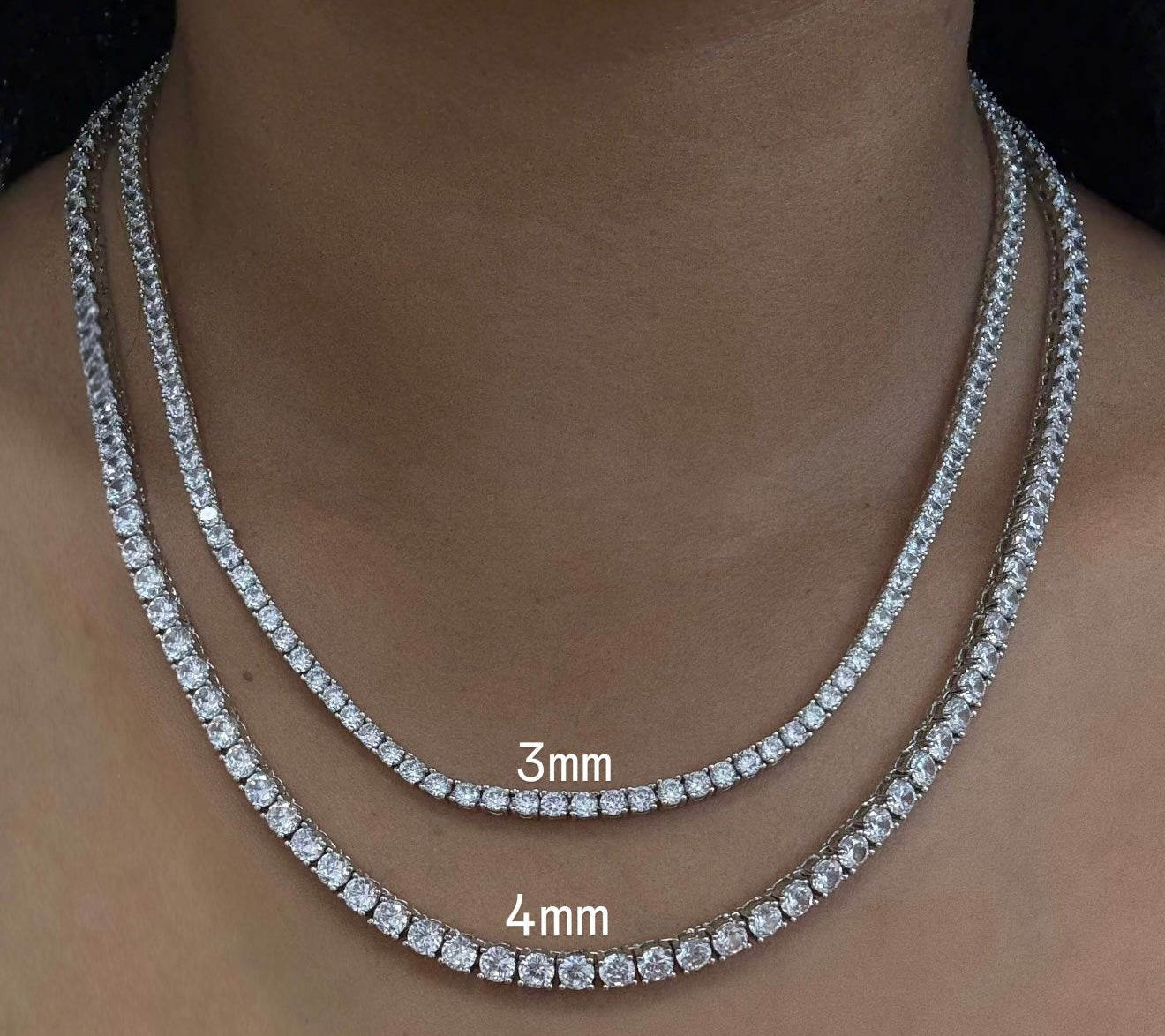
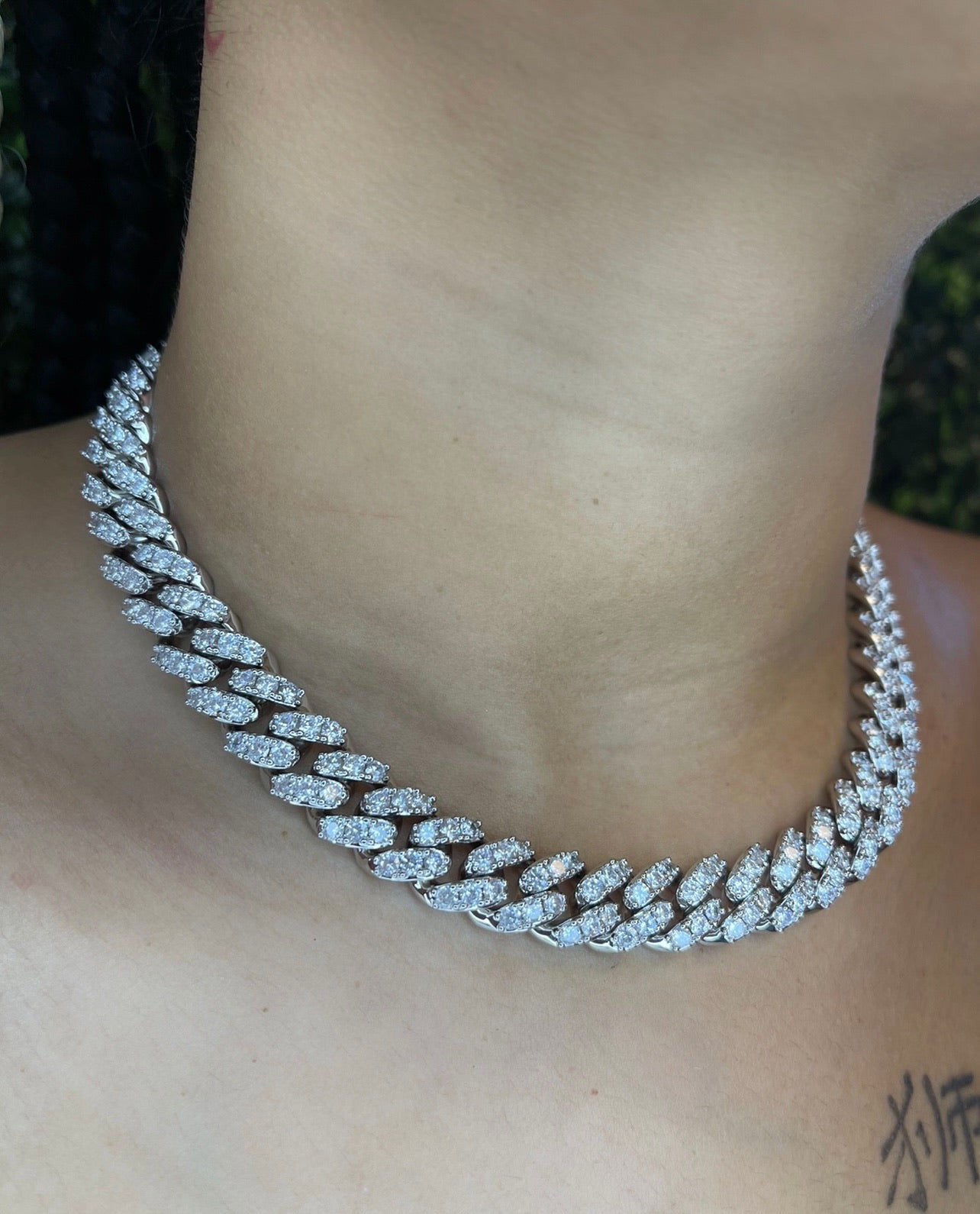
"Iced out" is a styling term, not a quality term. It describes any piece of jewelry that's been densely set with sparkling stones across its surface — the stones "ice" the metal, covering it in light. The chain underneath could be a Cuban link, a tennis design, a rope, or a custom shape. What makes it iced is the dense stone coverage.
The term doesn't tell you anything about what the stones actually are. An iced-out Cuban chain might have:
- Natural diamonds (mined)
- Lab-grown diamonds (chemically identical to mined diamonds, made in a lab)
- Moissanite (a different stone that looks similar to diamond)
- Cubic zirconia, or CZ (a synthetic stone that mimics diamond)
- Crystal or glass (lower-end pieces)
All five can produce a chain that looks iced out in product photos. The differences show up in price, in how the stones perform over time, and in resale value.
Real Diamonds vs. Lab Diamonds vs. CZ: The Real Differences
Let's break down what's actually in your chain:
Natural Diamonds
Mined from the earth, cut and polished, then individually set into the metal. They're the hardest substance commonly used in jewelry (10 on the Mohs hardness scale), they refract light in a specific way, and they hold their value over time — a real diamond chain has resale value, sometimes substantial.
Real diamond iced-out chains start around $5,000 for small, lower-clarity stones and run well into six figures for larger, higher-clarity pieces. A celebrity-grade iced-out Cuban with VVS-clarity diamonds can easily run $50,000 to $250,000+.
Lab-Grown Diamonds
Chemically and structurally identical to mined diamonds — same hardness, same light performance, same chemical formula. They're grown in a lab using one of two processes (HPHT or CVD) instead of being mined from the ground. To the naked eye, and even to most jewelers without specialized equipment, they're indistinguishable from natural diamonds.
Lab-grown iced chains cost roughly 60-80% less than natural diamond equivalents. A piece that would be $30,000 in natural diamonds might be $7,000-10,000 in lab-grown. The visual result is identical. The trade-off is resale value — lab-grown diamonds don't hold value the way natural ones do, because the supply isn't limited.
Moissanite
A different gemstone that's actually more brilliant than diamond — it refracts more light, which gives it a slightly more colorful sparkle (sometimes called "disco ball" effect). It's also extremely hard (9.25 Mohs) and durable. Moissanite has become popular in iced-out pieces because it gives more visual sparkle than CZ at a fraction of the cost of diamond.
A moissanite iced chain might cost $1,000 to $5,000 — still a significant investment, but a fraction of even a lab-grown diamond chain.
Cubic Zirconia (CZ)
A synthetic stone designed specifically to look like diamond. High-quality CZ — sometimes called "AAAAA grade" or "5A" — has been used in fine jewelry for decades and looks remarkably like diamond, especially in photos and at conversational distances. The differences become visible under direct examination: CZ refracts light slightly differently, can fog more easily, and is softer (8.5 Mohs), which means it can develop tiny scratches over years of heavy wear.
CZ iced chains are the most accessible option, ranging from around $50 for plated pieces to $500+ for solid sterling silver with high-grade stones. Most affordable iced-out chains sold online are CZ, even when they're not labeled as such.
How to Tell Them Apart
You can't always tell the difference visually, especially in photos. Here are the markers that actually work:
The price. This is the most reliable indicator. A chain priced under $1,000 is almost certainly CZ. A chain priced between $1,000 and $5,000 is likely moissanite or low-end lab-grown. Above $5,000, you're probably getting lab-grown or natural diamonds, and the description should specify which.
The certification. Real diamonds (natural or lab-grown) typically come with a grading report from GIA, IGI, or another independent lab. CZ doesn't get certified, because there's nothing to certify — it's a uniform synthetic. If you're being told a piece has real diamonds and there's no certificate, ask why.
The stamp. Real diamond pieces are usually mounted in solid gold or platinum, stamped 14K, 18K, or 950PT. CZ pieces are often mounted in sterling silver, gold-plated brass, or stainless steel — sometimes good materials, but not the same level. Check the metal stamp.
The fog test. Breathe on the stones like you're fogging a mirror. Real diamonds disperse heat quickly and the fog clears in about a second. CZ holds the fog for several seconds. This isn't infallible, but it's a quick check at home.
Weight. Real diamonds are denser than CZ. A real diamond iced chain feels heavier than a CZ chain of the same dimensions. If you have both to compare, the difference is noticeable.
Are CZ Chains "Fake"?
This depends on what you mean by fake. Cubic zirconia is a real stone — it's just synthetic, designed to mimic diamond. It's not a worthless plastic crystal. High-grade CZ is durable, brilliant, and used in jewelry across all price points.
The problem is when CZ is marketed as diamond. A piece described as a "diamond chain" that's actually CZ is misrepresented — that's where "fake" applies. A piece described as an "iced-out CZ chain" or "diamond simulant chain" is honest about what it is, and there's nothing fake about that.
If you're buying for the look and don't care about resale value, a quality CZ chain delivers 90% of the visual impact of a diamond chain at 1-5% of the cost. That math works for a lot of people.
What You Should Actually Buy
Match your purchase to your goal:
Buying for the look at a reasonable price? Get a high-quality CZ piece in solid sterling silver or solid gold-plated stainless steel. Spend the money on the metal and setting quality, not on the stones. A well-made CZ chain in sterling silver will outlast a cheap diamond piece in a flimsy mount.
Buying as an investment or heirloom? Get certified natural diamonds in solid gold or platinum. The stones hold value, the metal holds value, and the piece can be repaired or reset over generations. Expect to pay accordingly.
Buying for daily wear without breaking the bank? Lab-grown diamonds in 10K or 14K gold are the value sweet spot. You get real diamond performance and durability at meaningful savings versus natural diamonds.
Buying as a gift or for a specific event? CZ is fine for occasional wear. The stones don't develop the kind of wear-and-tear in light use that becomes visible on a daily-worn chain.
The Honest Truth About Online Iced Chains
If you're shopping iced-out chains online and seeing prices in the $100-500 range, those are CZ pieces. Reputable retailers will tell you that directly. Less reputable ones use vague language like "diamond-quality" or "VVS" without specifying the actual stone. "VVS" describes clarity — it's used for both diamonds and CZ, and saying "VVS" alone doesn't tell you which stone you're getting.
The language to watch for: "diamond simulant," "CZ," "cubic zirconia," or "5A CZ" all mean cubic zirconia. "Lab diamond" or "lab-grown diamond" means actual diamond made in a lab. "Diamond" alone, with no qualifier, should mean natural mined diamond — but verify with a certificate before paying diamond prices.
Caring for an Iced Chain (Whatever the Stones)
Whether you have a real diamond chain or a CZ piece, the same care principles apply. Take it off before swimming, showering, or working out. Clean it regularly with mild soap and a soft brush to keep buildup from dulling the stones. Store it separately so other jewelry doesn't scratch the settings.
The stones in any iced chain are held by small prongs. Those prongs can bend or break over time, especially on cheaper pieces. If you notice a stone wobbling or missing, take the chain in for repair before more stones go.
For more on keeping the metal looking new, see our guide on preventing tarnish on CZ jewelry.
Bottom Line
Iced out doesn't mean diamond. It means "covered in stones," and the stones can be diamonds, lab diamonds, moissanite, or CZ. The price tells you which one you're getting more reliably than the marketing copy.
None of these options is wrong. CZ chains are honest, affordable, and look great. Real diamond chains are heirloom-quality investments. Pick the one that fits what you actually want from the piece, and don't let anyone tell you a CZ chain is "fake" if it's labeled as CZ — it's just a different category of jewelry.
Browse our Best Sellers to see what the most popular iced styles look like in person, or check our Sterling Silver collection for solid-metal pieces that hold up better long-term than plated alternatives.