925 Sterling Silver vs. Stainless Steel: Which Lasts Longer?
You're choosing between two chains. Both are well-made, both look great in product photos, and they're priced similarly. One is solid 925 sterling silver. The other is solid stainless steel. Which one actually lasts longer with daily wear — and which one should you buy?
The honest answer is that both are excellent metals for jewelry, and both will outlast most plated alternatives by years. But they age differently, require different care, and feel different on the body. Picking between them comes down to what you actually want from the piece, not just which one is technically more durable.
This guide breaks down the real differences — hardness, tarnish resistance, weight, color, allergy considerations, repairability, and lifespan — so you can decide which one fits your wear pattern and your collection.
The Quick Answer
Both metals last decades with proper care. The differences come down to:
- Sterling silver is softer, prone to tarnishing, more traditional in look, slightly heavier, and easily repairable. It develops character with age — some people love this, others don't.
- Stainless steel is much harder, essentially tarnish-proof, more modern in look, similar weight, and harder to repair if damaged. It looks the same on day 1 and day 1000.
If you want low-maintenance and modern, go stainless. If you want classic and don't mind occasional polishing, go sterling.
Hardness and Scratch Resistance
This is where stainless steel wins decisively. On the Mohs hardness scale:
- Sterling silver: ~2.5–3
- Stainless steel: ~5.5–6.5
Stainless steel is roughly twice as hard. In practice, this means stainless resists scratches and dings far better than silver. A stainless chain you toss in a bag with keys and a pocket knife comes out essentially unmarked. A sterling chain in the same situation comes out with visible scratches and small dents.
For pieces that take physical abuse — chains worn during workouts, rings worn during manual work, bracelets that bang into surfaces — stainless is the more practical choice. For pieces in lower-impact situations (dressy occasions, careful daily wear, jewelry stored carefully when not worn), the difference matters less.
Tarnish Resistance
This is where the most visible difference shows up. Sterling silver tarnishes — it's a chemical reaction between the copper alloy and sulfur in the air, and it happens to every silver piece eventually. Tarnish reverses with cleaning (we cover this in our guide on cleaning sterling silver at home), but it's a recurring task.
Stainless steel essentially doesn't tarnish under normal wear. The chromium content (typically 10–20% in jewelry-grade stainless) creates a passive oxide layer that prevents corrosion. You can wear stainless steel chains in the shower, swim with them, and skip cleaning for months without visual change. The only situations that affect stainless are aggressive chemicals (chlorine bleach, strong acids) or salt water over very long exposure.
If you want a piece you can wear and forget about, stainless is the easier choice by a significant margin.
Color and Finish
The two metals look subtly different even when both are polished:
- Sterling silver has a softer, slightly warmer tone — a slight grayness or warmth in the white. As it ages, an unpolished sterling piece develops a patina that can look intentional and aged on detailed work.
- Stainless steel has a cooler, harder, more reflective tone — a clean white that doesn't shift over time. Stainless looks consistently bright but lacks the depth and warmth that polished silver can have.
Visually, sterling silver tends to read as more traditional and "jewelry"-like. Stainless steel reads as more modern, industrial, or sporty. Neither is better; they suit different aesthetics.
For pieces with detailed work — textured surfaces, engravings, intricate settings — sterling silver typically shows the detail more beautifully because of its warmer reflectance and how it picks up shadow. Stainless tends to flatten detailed work slightly.
Weight and Feel
The two metals are similar in density:
- Sterling silver: 10.4 g/cm³
- Stainless steel: 7.7–8.0 g/cm³
Sterling silver is denser, so a sterling piece feels noticeably heavier than a stainless steel piece of identical dimensions. For chains, rings, and bracelets, this weight difference can be subtle but real — some people prefer the heft of silver as a quality marker; others prefer lighter pieces for daily comfort.
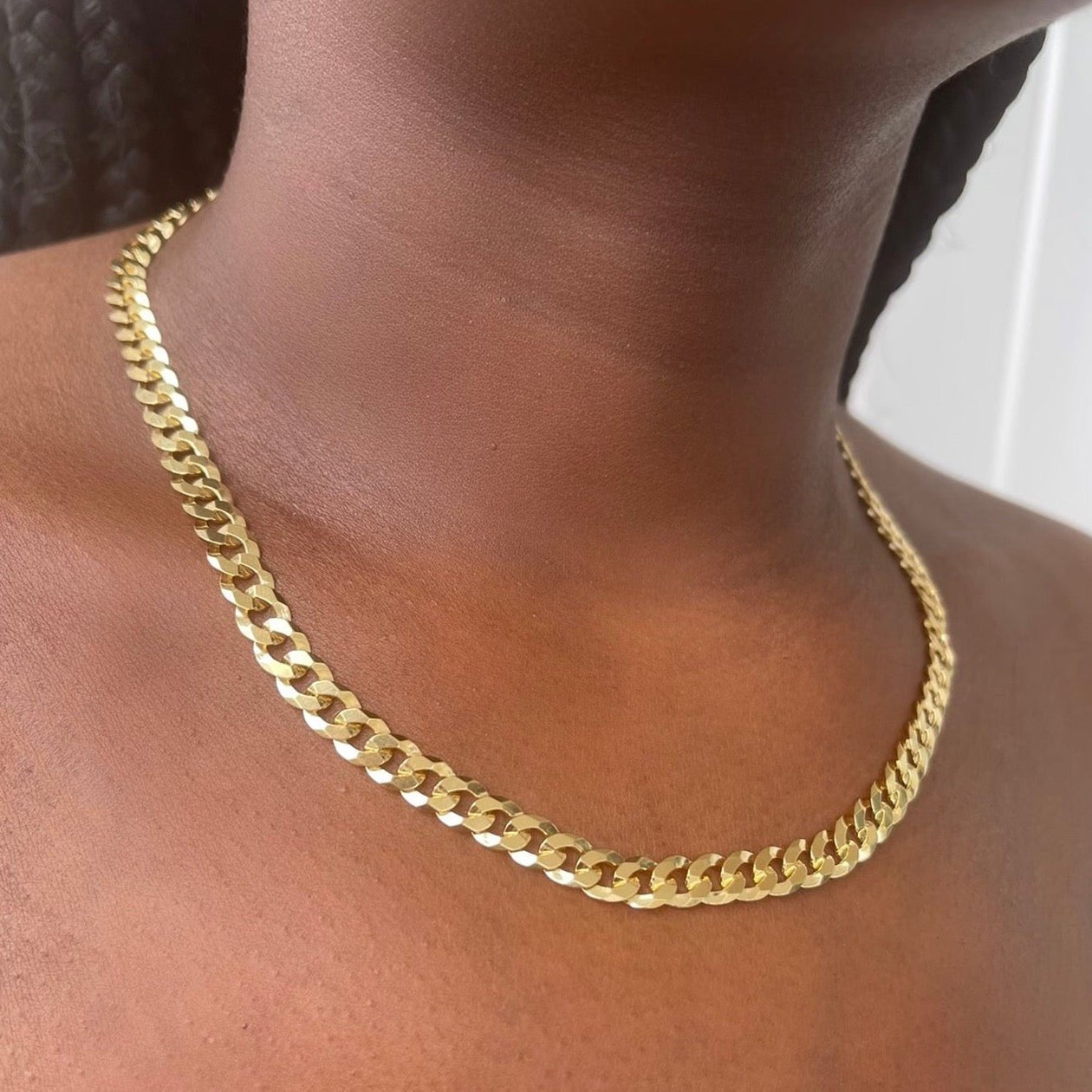
For larger pieces (thick chains, statement rings), the weight difference is more noticeable. A 10mm Cuban chain in sterling silver feels substantially heavier than the same chain in stainless steel.
Allergy Considerations
Sterling silver is .925 fine — 92.5% silver, 7.5% other metals (usually copper). Most people tolerate sterling silver without any issue, but a small number of people are sensitive to copper or develop reactions to alloys in cheaper sterling.
Stainless steel jewelry is typically 316L — a surgical-grade alloy used in medical implants. It's specifically designed for skin contact and is one of the most hypoallergenic metals available. People with nickel or copper sensitivities can usually wear 316L stainless without issues.
If you have known sensitivities, stainless steel (specifically 316L) is the safer default. If you have no known sensitivities, both are fine for most people.
Repairability
Sterling silver wins this one easily. Almost any jeweler can resize a silver ring, fix a broken chain link, polish out scratches, or solder a new piece onto an existing one. The metal has been worked the same way for centuries, and the techniques are universal.
Stainless steel is much harder to work with. The same hardness that protects it from damage makes it difficult to cut, resize, or solder. Many jewelers won't touch stainless pieces; the ones who will charge more, and some repairs simply aren't possible — a sized-down stainless ring may need to be replaced rather than resized.
For pieces you might want to modify or repair over time — a ring that might need resizing, a chain that might need a clasp replacement, an engraved piece you might want re-engraved — sterling silver gives you more options.
Lifespan with Daily Wear
Both metals are capable of decades of daily wear if cared for. Here's what affects their lifespan:
Sterling silver: Won't wear out, but will gradually accumulate scratches and require occasional polishing to look new. A silver chain worn daily for 20 years looks very different from one stored for 20 years — the wear is visible. Polishing restores it, but each polishing removes a tiny amount of surface metal. Over generations, this adds up; over a lifetime, it's negligible.
Stainless steel: Looks essentially unchanged after years of wear. Won't develop a patina, won't dull, won't require polishing. Some people find this lack of aging feels less personal — the piece doesn't carry a record of its wear.
If you want a piece that ages with you, sterling silver acquires character. If you want a piece that stays consistent, stainless holds its appearance.
Cost
Stainless steel is generally cheaper than sterling silver. A solid stainless steel chain might cost 30–60% less than the same design in sterling silver. Both are reasonable values compared to plated alternatives, but stainless wins on absolute price.
Sterling silver also fluctuates with the silver commodity market — prices can rise and fall with broader metal markets. Stainless steel is more price-stable.
Resale and Inherent Value
Sterling silver has scrap value. You can sell silver pieces back to a jeweler or refiner based on weight and silver market prices. The piece itself might be worth more if it's well-designed or vintage, but at minimum it has melt value that fluctuates with silver prices.
Stainless steel has essentially no scrap value. Like most fashion-grade metals, the piece is worth what someone will pay you for it as wearable jewelry, with no commodity value underneath.
For most casual wear, this distinction doesn't matter — you're buying jewelry to wear, not to liquidate. For pieces that might be passed down or sold, sterling has the edge.
Which Should You Buy?
Choose sterling silver if you:
- Want a piece with a more traditional or refined look
- Don't mind occasional polishing or cleaning
- Plan to keep or pass down the piece long-term
- Might want to resize, repair, or modify the piece in the future
- Prefer the warmer, more reflective tone
- Want pieces with detailed work that show their craftsmanship
- Like the idea of jewelry that ages with you
Choose stainless steel if you:
- Want maximum durability with minimum care
- Wear jewelry during workouts, swimming, or active pursuits
- Prefer a modern or industrial aesthetic
- Have known metal sensitivities
- Want jewelry that looks the same in 10 years as today
- Are buying at a lower price point and want quality solid metal
- Don't want to think about cleaning or maintenance
Can You Mix Them?
Yes, but with care. Both metals look white-ish, but as we mentioned, they have slightly different tones. Pieces from the same metal family will always coordinate more cleanly than mixing across families.
If you're building a layered look, picking one metal and committing to it gives the cleanest result. If you want to mix, treat one as primary and the other as an accent, rather than splitting them 50/50.
What About Plated Alternatives?
Both solid sterling silver and solid stainless steel will outlast plated jewelry by years. A gold-plated chain wears through in a year or two of daily use. A solid sterling or stainless chain doesn't have a finish to wear off.
If you've been frustrated by plated pieces losing color, fading, or staining your skin, switching to either solid material solves the problem. (We cover this in more detail in our guide on why gold-plated jewelry turns green.)
Bottom Line
Sterling silver and stainless steel are both excellent choices for jewelry that lasts. Sterling is more traditional, more repairable, and develops character over time — but requires occasional cleaning and is softer. Stainless is more modern, hypoallergenic, and essentially maintenance-free — but harder to modify and lacks the visual depth of sterling.
For daily wear pieces in active lifestyles, stainless is hard to beat. For jewelry you want to live with for decades and possibly pass on, sterling silver still holds its appeal.
Browse our Sterling Silver collection for solid sterling pieces, or check our Best Sellers across both materials to see what customers come back for. For comparing chain styles in either metal, our guide on Tennis Chain vs. Cuban Chain covers the visual differences between the two most popular silhouettes.