Article: Anklets: How to Wear Them and Which Length to Buy
Anklets: How to Wear Them and Which Length to Buy
Anklets used to be one of those pieces of jewelry that fell in and out of style every decade. Now they're a permanent fixture in most jewelry collections — worn year-round, paired with everything from sandals to sneakers, and styled in ways that range from delicate and barely-there to layered and statement-making.
The catch is that anklets are sized differently than necklaces or bracelets, they fit differently on different ankles, and the styling rules are slightly different from what you'd apply to other jewelry. This guide covers everything you need to know: how to size them, how to wear them, how to layer them, and which styles work for which occasions.
How Anklets Are Sized
Anklets are typically sold in lengths from 8 inches to 11 inches, measured end-to-end including the clasp. Standard sizing breaks down roughly like this:
- 8–8.5 inches: Petite — fits slim ankles, sits closer to the bone
- 9 inches: Average — the most common default size
- 9.5 inches: Slightly relaxed fit, sits with a bit of drape
- 10 inches: Loose, drapes lower around the ankle
- 10.5–11 inches: Larger ankles or deliberately loose styling
Most adult women fit a 9-inch or 9.5-inch anklet comfortably. Men's ankles tend to need 10–11 inches.
How to Measure Your Ankle
The accurate way: wrap a soft tape measure or string around your ankle just above the ankle bone (the bony bump on the outside of your foot). Note the measurement, then add 0.5–1 inch for a comfortable fit — you don't want the anklet tight against the skin.
For a snug fit, add 0.5 inches. For a slight drape, add 1 inch. For a loose, lower-sitting style, add 1.5 inches.
If your ankle measures 8 inches: order 8.5–9 inches.
If your ankle measures 9 inches: order 9.5–10 inches.
If your ankle measures 9.5 inches: order 10–10.5 inches.
Where Anklets Should Sit
An anklet should sit just above the ankle bone, not below it. If it's sliding down toward your foot, it's too loose. If it's pressing into the skin or leaving marks, it's too tight.
The sweet spot is loose enough to rotate slightly around your ankle and slide up and down by a quarter-inch or so, but not loose enough to fall over the bone. You should be able to slip a finger underneath the anklet without strain.
Some styles intentionally sit lower (closer to the foot) for a more casual or boho look. These are typically longer than your fitted size by 1.5–2 inches.
Styles of Anklets
The anklet category covers a wide range of looks. The main styles:
Chain Anklets
The most common and versatile style — a single chain (Cuban link, Figaro, rope, box, or curb) sized for the ankle. Chain anklets work with everything: sandals, sneakers, dresses, jeans, swimwear. Width matters: 1–2mm reads as delicate and minimal; 3–4mm reads as substantial and visible; 5mm+ reads as a statement piece.
Beaded Anklets
Anklets made from small beads strung together — sometimes a single material (gold beads, pearls, glass beads), sometimes a mix of bead types and colors. Beaded anklets read as more casual or boho and pair especially well with summer outfits, beach looks, and more relaxed styling. They're less appropriate for formal or professional settings.
Charm Anklets
Chain anklets with one or more small charms or pendants attached. The charms might be hearts, stars, evil eyes, initials, birthstones, or other personal symbols. Charm anklets add personality without the visual weight of multiple chains — the charm gives the eye a focal point.
Tennis Anklets
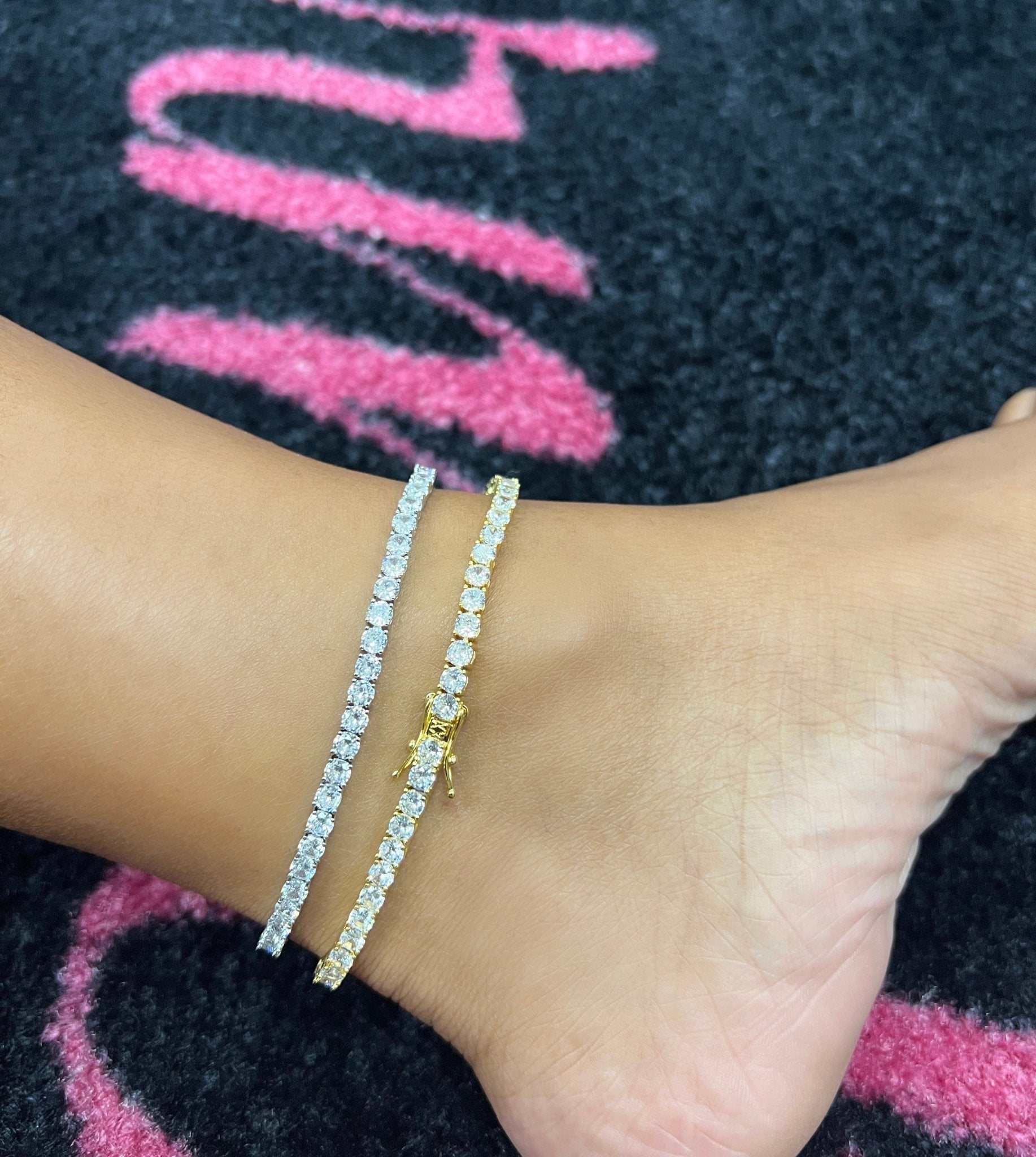
The anklet version of a tennis chain — a continuous strand of small stones (CZ or diamonds) set in metal prongs around the ankle. Tennis anklets read as elegant and slightly dressy. They catch light beautifully and work especially well with skirts, dresses, and any outfit where you want a touch of sparkle without bulk.
Anklet Bracelets with Bells or Tassels
Common in some traditional jewelry styles (especially South Asian and Middle Eastern designs), these anklets include small bells, tassels, or other ornaments that move with the wearer. They have a more cultural or specifically styled feel and tend to suit specific outfits rather than everyday wear.
Permanent Anklets
A trend over the last few years: anklets welded shut at a jeweler so there's no clasp — the piece stays on your ankle until you cut it off. They feel like a piece of you rather than a piece you put on. Trade-off: you can't easily change them or remove them for activities, and they don't suit medical or security situations where you may need to remove all jewelry.
How to Wear Anklets
The biggest question people have: which ankle does the anklet go on? Honestly, either one. There's no rule. Some people prefer the right ankle for visibility while walking; some prefer the left because of dominant-side considerations; some wear one on each.
That said, a few practical considerations:
- Most people walk with their dominant leg slightly forward. If you want the anklet visible, put it on your dominant-side ankle (right ankle for right-handed people).
- If you wear an anklet on the same side as a watch, the visual balance feels slightly off. Putting the anklet on the opposite side from your watch creates a more even visual.
- Some cultural traditions associate anklets with specific sides; if you grew up with these traditions and they matter to you, follow them.
What to Wear Anklets With
Anklets work with almost anything that exposes your ankle. Some specific pairings:
Sandals and flip-flops: The classic anklet outfit. Both styles fully expose the ankle and work with chain, beaded, or charm anklets.
Sneakers and low-cut shoes: Works if the shoe sits below the ankle bone. Anklets visible above sneakers add an unexpected layer to casual outfits.
Heels: Particularly elegant pairing. The anklet draws the eye to the ankle and the heel elongates the leg. Tennis anklets and delicate chain anklets work especially well here.
Boots: Anklets disappear under most boots, so this combination doesn't make sense unless the boot is specifically low enough to expose the ankle bone.
Dresses and skirts: Adds a small unexpected detail at the leg. Looks intentional rather than accidental.
Jeans: Works only if the hem sits above the ankle. Cuffed jeans, ankle-cropped styles, and shorts all work; full-length straight-leg jeans cover the anklet entirely.
Swimwear: Anklets are a popular addition to beach and pool outfits. Stick with materials that handle water well — solid stainless steel, solid sterling silver, or solid gold. Avoid plated pieces, which lose finish quickly with chlorine and salt water exposure.
Layering Anklets
Wearing two anklets together has become as common as wearing a single one. The same principles that apply to layering necklaces apply here:
- Different lengths: The anklets should sit at slightly different positions on your ankle, not stacked on top of each other. Pair a 9-inch with a 9.5-inch, or a 9.5-inch with a 10-inch. The looser one drapes slightly lower than the snug one.
- Different styles: Two identical anklets look like one anklet that doubled. Mix styles — a chain anklet with a beaded anklet, or a delicate chain with a charm anklet — so each piece has its own role.
- Same metal family: Mixing gold and silver across two anklets close together gets visually busy. Pick one tone and stick with it.
Three anklets is the upper limit for most ankles. More than that and the visual gets cluttered, especially since the ankle isn't a large canvas.
Materials That Hold Up
Anklets take more abuse than most other jewelry. They hit walls, doorways, furniture, and the bottom of pant legs. They get sweaty during the day. They're more exposed to dirt, sand, and water than a chain around your neck.
The materials that hold up best:
- Solid stainless steel: Essentially indestructible, doesn't tarnish, fine in water
- Solid sterling silver: Will tarnish but cleans easily, takes scratches but holds up well
- Solid gold (10K, 14K): Durable, doesn't tarnish, holds up beautifully but expensive
- Gold-filled: Mid-range option — thicker gold layer that lasts much longer than plated
Avoid plated anklets for daily wear. The plating wears through faster on anklets than on necklaces because of the higher friction with skin, clothing, and shoes. A plated anklet typically looks worn within months of regular wear.
Care and Maintenance
Anklets need slightly more care than other jewelry because of their exposure:
- Take off before showers if the piece is plated. Solid materials can handle occasional water but benefit from being dried after.
- Avoid sunscreen and lotion contact when possible. The chemicals can dull metal and cause buildup that catches on the chain.
- Check the clasp regularly. Ankle clasps take more stress than necklace clasps because of the constant motion of walking. A weakening clasp can fail without warning. Replace or repair before it breaks.
- Clean periodically. The same cleaning methods that work on necklaces work on anklets. See our guide on cleaning sterling silver at home for the full breakdown.
When Anklets Don't Work
A few situations where anklets either don't work or aren't appropriate:
- Most professional or formal settings. Anklets read as casual in most workplaces, especially conservative ones. They're fine for creative industries but can feel out of place in finance, law, or formal corporate environments.
- Under closed-toe shoes and boots. If no one can see the anklet, it's mostly for personal feel rather than visual styling.
- During heavy workouts or contact sports. Anklets can catch on equipment or get bent during high-impact activities.
- With certain medical conditions. Diabetics or people with circulation issues should consult their doctor about jewelry that compresses the ankle, even slightly.
Bottom Line
An anklet is one of the easiest jewelry pieces to add personality to summer outfits, beach looks, or any time your ankle is visible. The main things to get right are the size (your ankle measurement plus 0.5–1 inch), the material (solid metals last; plating doesn't), and the style match (delicate chains for everyday, charms or beads for boho, tennis for elegance).
If you've never worn an anklet before, start with a delicate chain anklet at 9 or 9.5 inches in solid sterling silver or stainless steel. It's the most flexible single piece and you'll learn what styles you actually like before investing in more specialized options.
Browse our Anklets collection for the full range of styles, or check our Best Sellers for the most popular options.